

Donald Trump and the Use of U.S. Military Power: Strategy, Controversy, and Global Impact
January 5, 2026 | by arunkumarknj1976@gmail.com

Donald Trump and the Use of U.S. Military Power: Strategy, Controversy, and Global Impact
By International Affairs Desk
Donald Trump’s approach to U.S. military power has long been one of the most debated aspects of his political career. Whether as President of the United States or as a dominant political figure shaping Republican foreign policy, Trump has repeatedly shown a willingness to use force—or the threat of force—as a tool of diplomacy. His actions and rhetoric have left a lasting impact on global geopolitics, America’s alliances, and perceptions of U.S. power abroad.
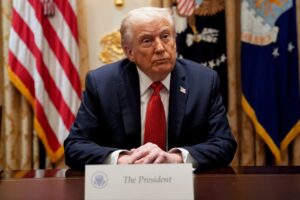
“Peace Through Strength”: Trump’s Core Doctrine
Donald Trump has consistently described his foreign policy philosophy as “peace through strength.” During his presidency (2017–2021), he argued that decisive military action, or the credible threat of it, prevented larger wars. Trump rejected what he called “endless wars,” yet he did not hesitate to authorize targeted strikes when he believed U.S. interests were directly threatened.
This dual approach—opposing long-term military occupations while supporting short, high-impact attacks—defined Trump’s military strategy and continues to influence his political messaging today.
Major U.S. Military Actions Under Trump
One of the most significant military decisions during Trump’s presidency was the 2017 cruise missile strike on Syria, launched in response to the Assad government’s alleged use of chemical weapons. The strike targeted a Syrian airbase and was framed as a limited, punitive action rather than the beginning of a broader conflict.
In 2018, Trump again authorized coordinated airstrikes with the United Kingdom and France against Syrian government facilities. These attacks reinforced Trump’s willingness to use military force quickly, even while publicly stating that the U.S. should not remain deeply involved in Syria’s civil war.
Perhaps the most controversial action came in January 2020, when a U.S. drone strike killed Iranian General Qasem Soleimani, one of the most powerful military figures in the Middle East. The strike dramatically escalated tensions between the United States and Iran and raised fears of a full-scale regional war. Trump defended the action by stating that Soleimani was planning imminent attacks on U.S. personnel.
Trump, Iran, and the Use of Threats
Iran has remained central to Trump’s military rhetoric. Trump withdrew the United States from the Iran nuclear deal (JCPOA) in 2018, arguing that it failed to prevent Tehran’s long-term nuclear ambitions. Following the withdrawal, Trump implemented a “maximum pressure” campaign that included economic sanctions and military posturing.
Trump frequently warned that Iran would face devastating consequences if it attacked U.S. interests. While a direct war did not occur during his presidency, the period was marked by missile exchanges, proxy conflicts, and rising instability across the Middle East.
North Korea: From Fire and Fury to Diplomacy
Trump’s handling of North Korea demonstrated his unconventional style. In 2017, he warned of “fire and fury like the world has never seen” if North Korea threatened the United States. The aggressive language raised global alarm.
However, Trump later shifted toward diplomacy, becoming the first sitting U.S. president to meet a North Korean leader. While these meetings did not result in complete denuclearization, they showed Trump’s preference for high-profile negotiations backed by military pressure.
Avoiding Large-Scale Wars
Despite authorizing several high-risk military operations, Trump repeatedly emphasized that he did not start new major wars. He criticized past U.S. administrations for long conflicts in Iraq and Afghanistan and pushed for troop withdrawals.
Under Trump, the U.S. negotiated the Doha Agreement with the Taliban, setting the stage for a future U.S. withdrawal from Afghanistan. Critics argue the agreement weakened the Afghan government, while supporters say it aligned with Trump’s promise to bring American troops home.
Trump’s Recent Statements and Military Posture
Since leaving office, Trump has continued to speak forcefully about military power. During campaign rallies and interviews, he has claimed that global conflicts such as the Ukraine war and Middle East escalations would not have occurred under his leadership.
Trump has warned adversaries—including Iran, militant groups, and even rival states—that U.S. military strength would be restored “without hesitation” if he returned to power. These statements appeal to voters who view strength and deterrence as essential to national security, but critics fear such rhetoric could increase global instability.
Global Reaction to Trump’s Military Approach
International reactions to Trump’s use of force have been mixed. Some U.S. allies appreciated the clarity of American red lines and decisive responses. Others expressed concern that unilateral actions undermined international law and multilateral institutions.
In the Middle East, Trump’s military actions reshaped regional calculations. In East Asia, his unpredictable stance toward North Korea forced allies like South Korea and Japan to prepare for rapid shifts in U.S. policy.
Supporters vs. Critics
Supporters argue that Trump’s willingness to strike hard targets deterred enemies and prevented larger conflicts. They credit him with avoiding prolonged wars while maintaining U.S. dominance.
Critics counter that Trump’s actions increased the risk of miscalculation, weakened diplomatic norms, and normalized the use of force without broad international support. The Soleimani strike, in particular, remains a focal point of debate among legal experts and foreign policy analysts.
Conclusion
Donald Trump’s relationship with U.S. military power is defined by contradiction: restraint paired with sudden aggression, isolationist language combined with dramatic force. Whether praised as a strong leader or criticized as dangerously unpredictable, Trump has undeniably reshaped how the world views American military action.
As global tensions continue and Trump remains a central political figure, his views on military attacks and defense strategy will remain a critical factor in both U.S. elections and international security calculations. The debate over Trump’s legacy—and potential future role—in U.S. military decision-making is far from over.
RELATED POSTS
View all

8th Pay Commission Salary Hike: लेवल-6 कर्मचारियों की लगेगी लॉटरी! ₹35,400 वाली बेसिक पे सीधे ₹68,000 पार, देखें कैलकुलेशन
January 6, 2026 | by arunkumarknj1976@gmail.com
UP Weather Update: यूपी में हाड़ कंपाने वाली ठंड का ‘रेड अलर्ट’, जानें अगले 48 घंटों में कैसा रहेगा आपके शहर का मौसम?
January 8, 2026 | by arunkumarknj1976@gmail.com
